I want to be upfront: I didn't expect this experiment to work. I expected it to confirm what I already believed — that no educational app stands a chance against the dopamine machine that is TikTok. I was ready to be right. I was not right.
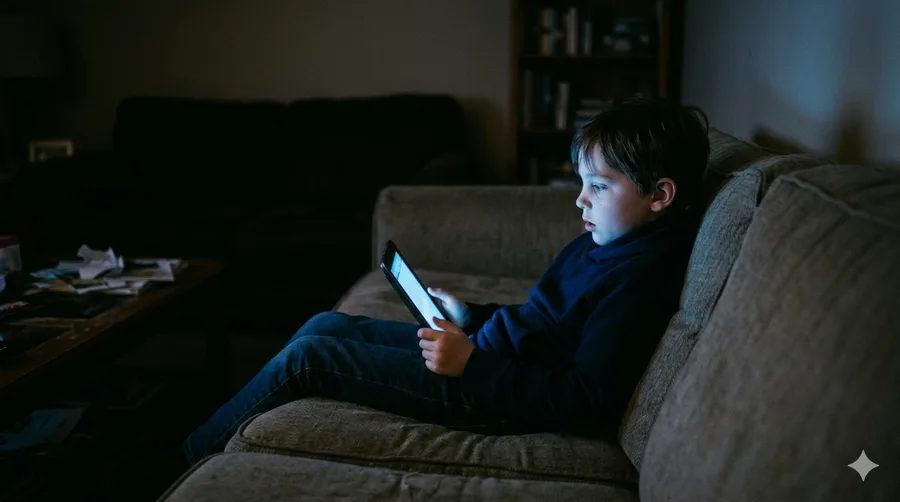
Here's the setup. My two kids, ages 9 and 12, had been spending more and more time on TikTok. Thirty minutes after school turned into two hours on weekends. I'd tried screen time limits. I'd tried confiscating devices. I'd tried the guilt speech. None of it stuck. So I decided to try something different: instead of removing TikTok, I'd give them a choice. For one full week, they could open TikTok — or they could try something else I'd found. Their call, every single day. No pressure from me either way. I'd just log what they chose.
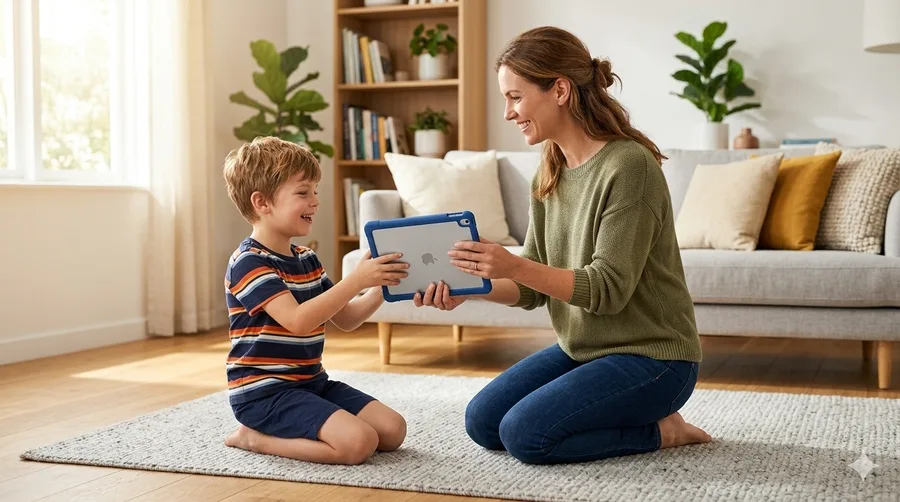
The "something else" was an app a friend had mentioned in a parent group chat. Educational, she said. But the kids actually like it, she'd added, which was the part I didn't believe. I set it up on their tablets the night before the experiment began. I told them it existed. I said nothing more.
→ Curious what it is? You can try it free — no credit card needed.
Day 1: No Surprises
Monday afternoon, both kids went straight for TikTok. Obvious. Expected. I noted it in my little log and said nothing. The app icon sat untouched on their screens.
What I did notice: my 12-year-old, Léa, glanced at the other app twice. She didn't open it, but she looked at it the way you look at a restaurant menu before ordering the same thing you always get. Just... aware of it.
My 9-year-old, Matéo, didn't look at it once. He was deep in a TikTok rabbit hole about people doing magic tricks with cards. Classic Matéo.
Day 2: Still TikTok, But Something Shifts
Tuesday, same story. TikTok first, TikTok second. But on Tuesday evening, Matéo asked me what "the other app" was actually about. I kept it vague on purpose. "It's a game," I said. "You earn points. There are rare cards." I left it at that. He said "hm" and went back to his tablet.
Later, I found out he'd opened it. Just for two minutes, he said. Just to see. He'd closed it before finishing a single card.
Progress? Maybe. Or maybe just curiosity with no follow-through. I've been burned by "just to see" before.
Day 3: The Crack in the Wall
Wednesday was when things got interesting.
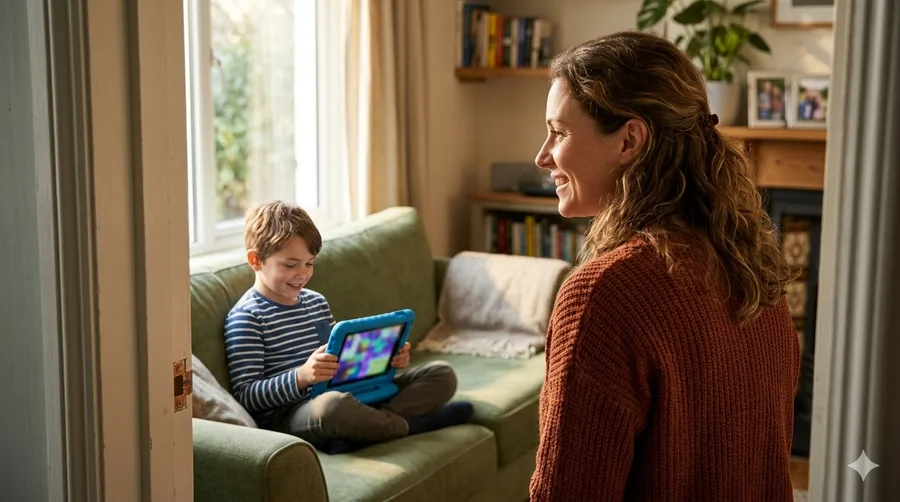
Matéo came home from school and opened the app before TikTok. Not because I asked. Not because I reminded him. He just did it. I watched from the kitchen, absolutely not reading over his shoulder, while very much reading over his shoulder.
He was doing some kind of card-matching challenge. Science questions. He got a streak going — several correct in a row — and when the app told him he'd unlocked a Rare card, he actually pumped his fist. Like, physically pumped his fist. For a question about the water cycle.
He played for about ten minutes. Then the app — and I need to emphasize this — the app stopped itself. It showed him a summary screen. Session complete. Points earned. Come back tomorrow. And it closed.
He stared at the screen for a second. Then he went and watched TikTok. But he'd done the other thing first, voluntarily, and it had taken exactly ten minutes of my day to worry about it.
Day 4 and 5: Léa Joins In
By Thursday, Léa had gotten curious. Matéo had apparently been telling her about "boss battles" — some kind of boss-fight mechanic in the app where you answer questions to deal damage to a monster. She wanted to see it.
They ended up playing together for a few minutes, which has never once happened with TikTok. TikTok is a solo, private, slightly glazed-eyes activity. This was collaborative. They were arguing about whether an answer was true or false. Good-naturedly. Loudly.
Friday: both kids opened the app first. TikTok came later, if at all.
The Weekend: The Full Inversion
By Saturday and Sunday — the days when they had the most screen time available — the pattern had completely reversed. The app was the first thing they reached for after breakfast. TikTok was the afterthought.
Matéo had built a three-day streak and was genuinely anxious about protecting it. Léa had unlocked an Epic card and described it to me in detail, including its rarity tier, as if it were a Pokémon she'd caught. The app had clearly designed this well. The progression felt real to them.
The thing that kept striking me: every single session ended on its own. Ten minutes, summary screen, done. No "just one more." No begging me to let them keep going. The deck ran out. That was it.
What Is This App, Actually?
At this point I think I owe you an answer. The app is called BrainOshi.
It's a daily learning app for kids built around a finite deck of interactive cards — 10 to 15 per session, covering topics like science, history, maths, language, and geography. The cards aren't just multiple choice. They include ordering challenges, matching puzzles, true/false, fill-in-the-blank, even sequence questions. Each session takes about ten minutes and then it ends. There is no infinite scroll. There is no autoplay. The app genuinely stops.
The gamification layer is what makes it stick: kids earn points, build streaks, unlock badges, collect cards with rarity tiers (Common, Rare, Epic, Legendary), and face boss battles where their accumulated knowledge is the weapon. Difficulty adapts based on how they're actually performing. Parents set the topics, the session length, and the difficulty baseline. There's a free plan, and paid plans starting at €4.99/month.
What is BrainOshi?
A daily 10-minute learning app for kids — interactive cards, boss battles, rare collectibles, and zero infinite scroll. Parents control the topics. The app ends itself.
→ Try it free at brainoshi.com
Why Did They Actually Choose It?
I've thought about this a lot. TikTok is objectively more stimulating. More variety. More novelty. Faster feedback loops. By every metric of engagement design, it should win every time.
But I think that's also the problem with TikTok — it never ends. There's no completion. No moment of "I finished something." Kids are handed an endless corridor with no doors. BrainOshi gives them a room with walls. You enter, you do the thing, you come out the other side with something to show for it. Matéo's streak. Léa's Epic card. A score they can look at.
That sense of completion, I think, is more satisfying than most of us realize — including kids.
What Other Parents Are Saying
More than 350 families are using BrainOshi now. I found a few comments from parents in the same position I was in.
"My son asks to do his BrainOshi session before dinner. I didn't ask him to make it a rule — he just did," wrote one parent in a review. "First time any app has ever done that."
"I was skeptical. My daughter told me she 'needed' to protect her streak. I'll take it," said another.
Neither of these surprised me after my own week of watching.
The Verdict
I'm not naive. TikTok is still on their tablets. Some evenings they still reach for it first. I haven't declared victory over algorithmic entertainment. This isn't a story about a parent who fixed screen time.
It's a story about what I learned when I stopped fighting and started offering a real alternative. When you put something genuinely engaging next to TikTok — something with structure, progression, and an actual ending — kids don't always choose the dopamine spiral. Sometimes they choose the thing that feels like an achievement.
My experiment ended on Sunday. On Monday, unprompted, Matéo opened BrainOshi first again. That's week two now. I stopped logging.
I don't think I need to anymore.
Want to try the experiment yourself?
BrainOshi is free to start — no credit card, no commitment. Set up a profile for your kid in a few minutes, pick their topics, and let them run the first session. See what they say when it ends itself after ten minutes.
→ Start free at brainoshi.com — takes 3 minutes to set up