A father's honest account of trying — and failing — to fix his family's screen problem, and the unexpected thing that actually worked.
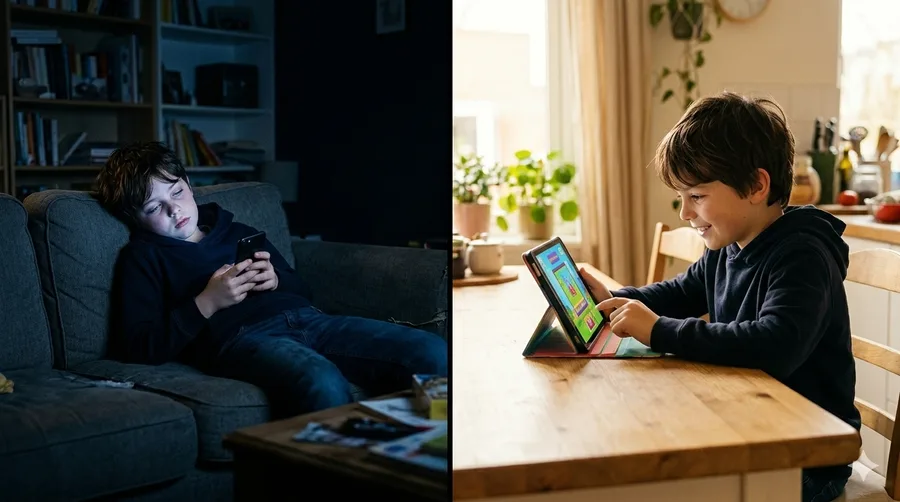
The average child in the US now spends over 4 hours a day looking at a screen. Not for homework. Not for anything educational. Just scrolling, watching, clicking, scrolling again. Studies put passive social video consumption alone at more than 2 hours daily for kids aged 8 to 14.
When I first read that number, I assumed it was exaggerated. Then I looked at my own kids — my son Liam, 11, and my daughter Nora, 9 — and I stopped assuming.
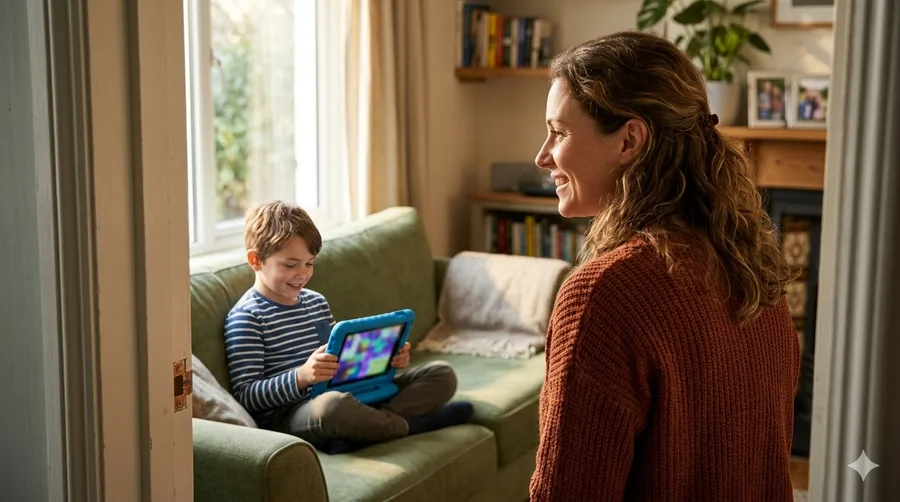
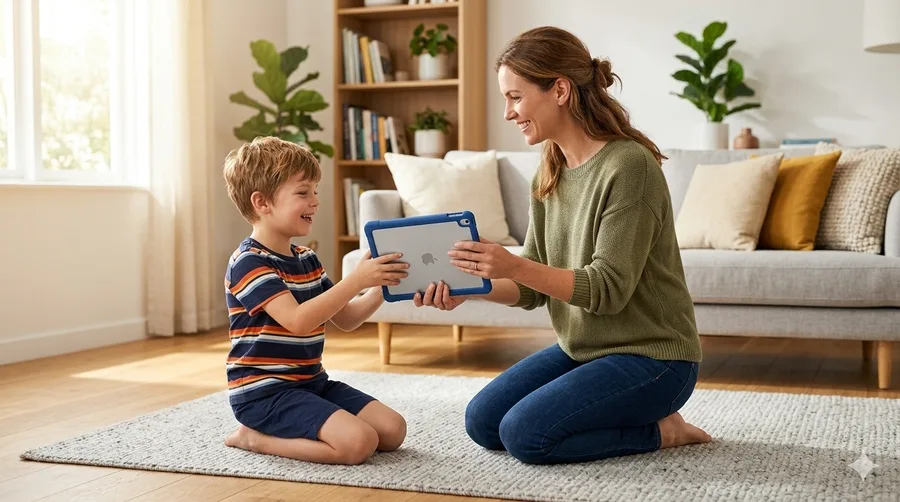
I had become one of those parents I used to judge. The ones who hand their kid a phone just to get ten minutes of peace. I wasn't a bad parent. I was an exhausted one. But the result was the same: two kids who would rather stare at a screen than do almost anything else.
I Tried Everything. Nothing Stuck.
Like every well-meaning parent, I had a phase where I tried to fix it properly.
We did screen time limits. We did "no screens before dinner." We tried the parental controls built into the router. Liam figured out how to bypass them within a week — I didn't even know that was possible for an 11-year-old, but here we are.
I downloaded a stack of "educational" apps. The ones with bright colors and cheerful mascots that promise to make learning fun. My kids tried them for two days, declared them boring, and went back to YouTube.
And honestly? I understood why. Those apps felt like homework with a cartoon on top. There was no tension, no reward, no reason to care. Just fill in the blank, get a star, next question.
I started to wonder whether the problem was my kids, or whether the problem was that nothing I'd tried was actually better than what they were already doing. Short-form video is engineered by entire teams of behavioral scientists to be maximally addictive. A flashcard app made by three developers in 2019 was never going to win that fight.
→ Curious? You can try it free here — no commitment needed.
The Link a Dad Sent in a Parents' Group Chat
I'm in one of those WhatsApp groups — the kind that's mostly school logistics and the occasional panicked message about a homework assignment nobody knew existed. One evening, a dad named Marcus dropped a link with a short message: "Been using this with my two for about a month. Thought some of you might want to try it."
I almost ignored it. I'd been burned enough times by recommendations in that group. Someone once told me a certain sleep app was "life-changing," and it made my son more anxious about sleep, not less.
But it was a Tuesday night, Liam had just spent 90 minutes watching videos of people opening trading card packs, and I was past the point of being picky. I clicked the link.
What I found was something I hadn't seen before. Not a traditional educational app. Not a game pretending to be educational. Something that felt genuinely different in its design logic.
The idea was simple: every day, your kid gets a small deck of learning cards. Interactive ones — not passive reading, but actual puzzles, multiple choice questions, true-or-false challenges, ordering problems. The deck takes around 10 minutes to complete. When it's done, it's done. The app doesn't offer more. It says "come back tomorrow" and that's it.
No infinite scroll. No autoplay. No algorithm pushing the next piece of content in front of a kid who's already spent too long on a screen.
There's a gamification layer that actually works: points, streaks, badges, boss battles at the end of the week. Rare cards that unlock based on how well you perform. Liam found out there were legendary cards and immediately wanted to know how to get one. That was the moment I knew I had something.
As a parent, I could set the topics — science, history, geography, language, maths — and the difficulty adjusted itself based on how each kid was performing. Nora found early sessions easy and the app started giving her harder questions automatically. She noticed, and it made her feel like the app was paying attention to her.
The app was called BrainOshi.
What is BrainOshi?
BrainOshi is a daily learning app for kids aged 6–14. Each day, your child gets a short, finite deck of 10–15 interactive cards covering topics you choose — science, maths, geography, history, language and more. Sessions end on their own with no infinite scroll, no autoplay, and no rabbit holes. Kids earn points, streaks, badges and rare cards. Parents control the topics, difficulty and schedule.
→ Try it free at brainoshi.com
What Other Parents Are Saying
After a few weeks of using it myself, I went back to Marcus and asked him what his experience had been like. He told me his daughter — also 9, same age as Nora — had started asking to do her "daily cards" before school in the morning. Not because she was told to. Because she wanted to maintain her streak.
"She cried once when she missed a day," he told me. "Not because she was upset about losing the streak. She was upset because she genuinely wanted to play and hadn't had time. That's a completely different emotion than the meltdown we used to get when we turned the iPad off."
I found similar accounts when I looked online. A mother named Sandra wrote about her 12-year-old son getting competitive about the weekly leaderboard within the family. Her two kids started comparing scores at dinner. "They were arguing about whether volcanoes count as geography or science," she wrote. "I couldn't stop smiling."
There are now more than 350 families using BrainOshi. The product is still relatively new, which is partly why it hasn't been in every parenting newsletter yet. But the word-of-mouth has clearly started spreading — Marcus wasn't the first person to get it from a parent group chat, and he won't be the last.
Thirty Days Later
I want to be honest about what changed and what didn't.
My kids still like YouTube. Liam still watches gaming videos. I haven't performed some miracle intervention that turned my children into miniature academics who now prefer reading encyclopedias to watching videos. That's not what happened, and if I told you it was, I'd be lying.
What did change was smaller and more sustainable than that.
The first thing I noticed was the morning routine. Nora started doing her daily deck while eating breakfast. It became a habit without me pushing it — I think partly because the app sends a gentle reminder at whatever time I set, and partly because she'd built up a streak she didn't want to break.
The second thing was the quality of what they were doing on screens. Not all screen time, not even most of it. But every single day, there was at least one 10-minute stretch that was actually building something — knowledge, memory, vocabulary, reasoning. That didn't feel like nothing.
The third thing — and this surprised me most — was that both kids started mentioning things they'd learned. Liam came home from school and told me his teacher had asked a question about the water cycle that he'd seen on BrainOshi that morning. He'd answered it. He seemed pleased in the quiet way kids get pleased when they feel competent.
I didn't expect to feel emotional about a learning app. But I did, a little bit.
There's a free plan available, which is where we started. We've since moved to the Premium plan at €4.99 a month for both kids — that unlocks more topics and longer sessions. There's also a Max tier at €9.99 if you want everything. For what we get out of it, I consider it money well spent.
If you're in the same place I was — watching your kid's screen time climb, feeling like nothing you try actually sticks — it's worth ten minutes of your own time to check it out.
Try BrainOshi Free — No Credit Card Required
Set up takes less than 5 minutes. Add your child's age, pick the topics they enjoy, and their first daily deck is ready to go. The app ends on its own — your job is just to get them started once.
→ Start for free at brainoshi.com — join 350+ families already using it