Duolingo teaches one language at a time. BrainOshi covers 7+ subjects — including language vocabulary — in 10–15 cards per day. Unless language fluency is your child’s only goal, BrainOshi delivers far more value in the same 10 minutes.
What They Have in Common
BrainOshi and Duolingo share the same underlying philosophy. Both are built on the idea that a few minutes per day, done consistently, beats a two-hour session once a month. Both use streaks. Both use gamification. Both are designed to become daily habits.
That alignment is not a coincidence. The research on spaced repetition and habit formation is clear — short, frequent practice beats marathon sessions for long-term retention. Both apps have internalized that.
The difference is scope.
Duolingo: One Subject, One Lane
Duolingo is built for language learning — vocabulary, grammar, and listening exercises in bite-sized lessons. It does that one thing. But that’s also its biggest limitation: no science, no history, no geography, no maths, no general knowledge. Ten minutes on Duolingo means ten minutes on a single language. Ten minutes on BrainOshi touches science, history, geography, maths, and language vocabulary — all in one session.
Duolingo’s gamification has also become increasingly aggressive. Hearts that penalize mistakes, guilt-tripping push notifications, and ads on the free tier create friction that many parents find off-putting for kids. BrainOshi’s gamification — streaks, rare cards, boss battles — rewards effort without punishing failure.
BrainOshi: 7 Subjects, 10–15 Cards, ~10 Minutes
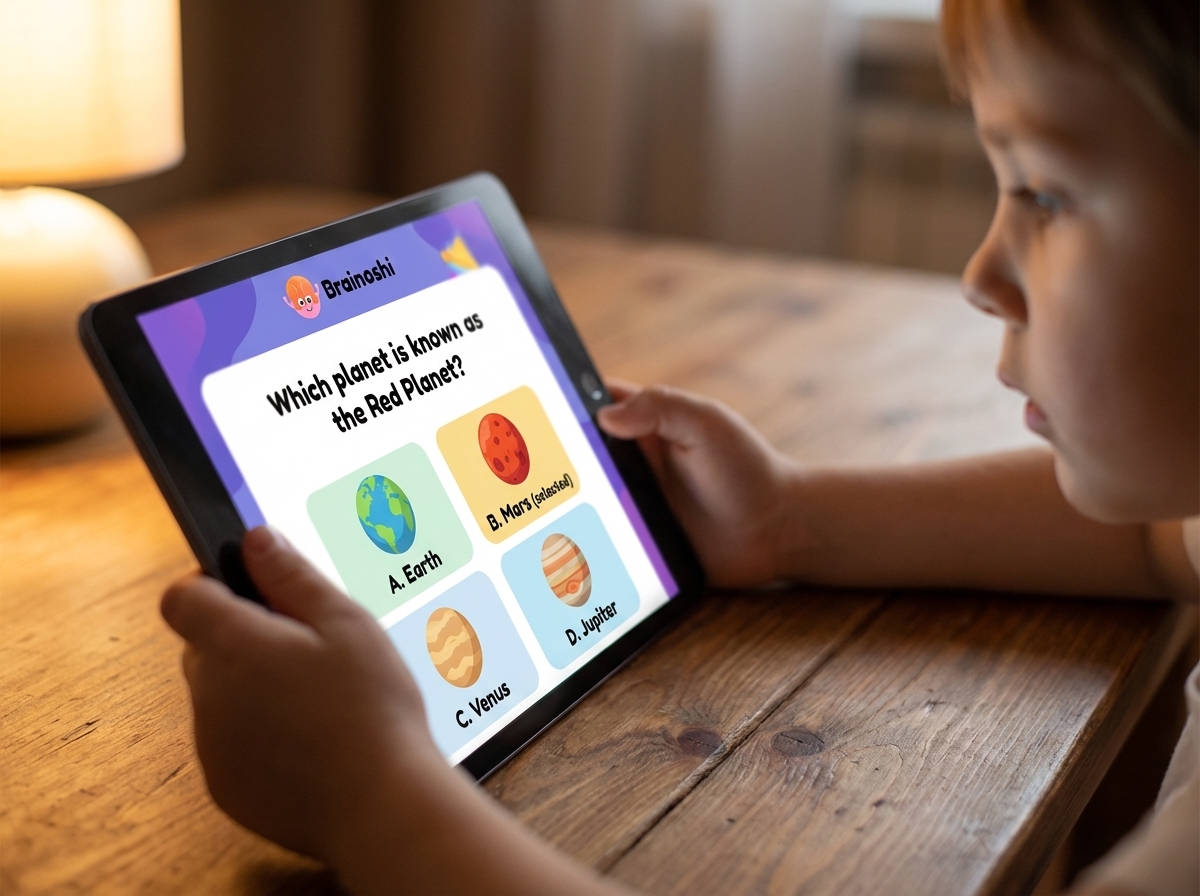
BrainOshi covers general knowledge, science, maths, history, geography, and languages. Each day, your child gets a short deck of 10–15 cards drawn from these subjects. The deck is set. Once they finish the 10–15 cards, the day's session is done.
The language component in BrainOshi is vocabulary and cultural knowledge across English, French, Arabic, and Spanish — not deep grammar instruction. If your child is studying Spanish at school and wants to go deeper, Duolingo handles that better.
If you want a single daily habit that touches science, history, geography, and language together, BrainOshi does that in the same ~10 minutes Duolingo would spend on one subject.
Side-by-Side Comparison
| Feature | BrainOshi | Duolingo |
|---|---|---|
| Subject coverage | 7 subjects (general knowledge, science, maths, history, geo, languages) | Languages only (40+ available) |
| Daily time | ~10 minutes | 5–15 minutes |
| Format | 10–15 cards (quiz, true/false, QCM, sorting) | Micro-lessons, matching, listening |
| Age target | 6–15 years | All ages (family accounts available) |
| Streak mechanic | Yes | Yes |
| Gamification | Streaks, badges, rare cards, points | XP, leagues, streaks, hearts |
| Parent dashboard | Yes | Yes (Duolingo for Schools) |
| Grammar instruction | No | Yes |
| Free tier | Yes (limited) | Yes (ad-supported) |
| Paid plan | $4.99/mo or $9.99/mo | $6.99/mo (Super) |
| Infinite content | No — 10–15 cards then done | Yes |
Try BrainOshi free — see how it works in 10 minutes →
Streak Psychology: Same Mechanic, Different Execution
Both apps use streaks, but the execution is very different. Duolingo’s streak system is aggressive — multiple daily push notifications, guilt-tripping messages when you miss a day, and a hearts system that punishes wrong answers. Many parents report that Duolingo’s notifications stress their children rather than motivate them.
BrainOshi’s streak is motivating without being anxious. It’s visible and rewarding, but missing a day doesn’t feel catastrophic. Combined with rare card rewards and boss battles, BrainOshi creates excitement around learning rather than pressure — a healthier dynamic for kids aged 6–14.
Can You Use Both?
You can, but most families find BrainOshi covers enough ground on its own. BrainOshi already includes language vocabulary cards across English, French, Arabic, and Spanish. For families where dedicated language fluency is a separate goal beyond what BrainOshi covers, adding Duolingo is an option — but BrainOshi should be the daily foundation.
Where BrainOshi Keeps It Real
BrainOshi’s language cards cover vocabulary and cultural knowledge — not deep grammar instruction. If your child is specifically preparing for a language exam, supplemental tools may help. But for most families, the question isn’t “will my child become fluent in French?” It’s “will my child learn something valuable every day?” BrainOshi answers that across 7+ subjects in 10 minutes flat.
Verdict
Unless your only goal is language fluency, BrainOshi gives your child much more in the same 10 minutes. Seven subjects instead of one. Cleaner gamification without guilt-tripping notifications. A finite deck that teaches healthy screen habits. And real-world knowledge — science, history, geography — that Duolingo doesn’t touch. For a well-rounded daily learning habit, BrainOshi is the clear winner.
Try BrainOshi Free — No Credit Card Required
Set up in under 3 minutes. Pick your child's age, choose the topics they enjoy, and their first daily deck is ready. The session ends on its own — no negotiation needed.
Start free at brainoshi.com →FAQ
Does BrainOshi teach languages like Duolingo?
BrainOshi includes language vocabulary and cultural knowledge cards across 4 languages. It’s not a deep grammar course — but most kids don’t need that. What they need is a daily habit that builds broad knowledge, and BrainOshi does that across 7+ subjects including language.
Is Duolingo good for kids under 10?
Duolingo works for motivated readers from about age 8. Younger children often need help with the format. BrainOshi's simpler card interface works from age 6.
Can BrainOshi replace Duolingo?
For most families, yes. BrainOshi covers 7+ subjects including language vocabulary and builds a stronger daily habit. Unless dedicated language fluency is the sole priority, BrainOshi delivers more value in the same time.
Which app has better gamification for kids?
Both are well-designed. Duolingo's league system works well for older kids (11+). BrainOshi's rare card mechanic tends to hook younger children (7–10) more effectively.
How much does BrainOshi cost vs Duolingo?
BrainOshi: free tier + $4.99/month (Premium) or $9.99/month (Max). Duolingo: free (with ads) or $6.99/month (Super).